


In John Huston’s 1941 film The Maltese Falcon, a striking moments occurs when Humphrey Bogart’s character, Sam Spade, slaps Joel Cairo, played by Peter Lorre. Cairo, a nervous and duplicitous figure, attempts to assert himself, but Spade quickly reestablishes control over him. When Cairo protests Spade’s rough handling, Bogart delivers the cutting line: “When you’re slapped, you’ll take it and like it.”
Bogart’s line crystallizes the noir worldview: in a corrupt, treacherous world, strength and authority are asserted through blunt force and uncompromising will. The phrase “you’ll take it and like it” is about submission, underscoring Spade’s role as the arbiter of power in a morally ambiguous environment. It also reflects the film’s broader theme: survival depends on one’s ability to dominate rather than be dominated.
This moment of forced submission resonates today in the way corporations and studios are inducting the public into artificial intelligence. The slap represents abrupt imposition, lack of alternatives, and eventual normalization. Nowhere is this dynamic clearer than in the video game industry, where developers and publishers present players with the illusion of control while quietly curating the market to suit corporate interests.

When applied to the gaming industry and the rise of AI, this metaphor reveals a troubling dynamic: consumers are cast in the role of Cairo, and developers (often accused of being villains themselves) see their audience as complicit antagonists who must be controlled.
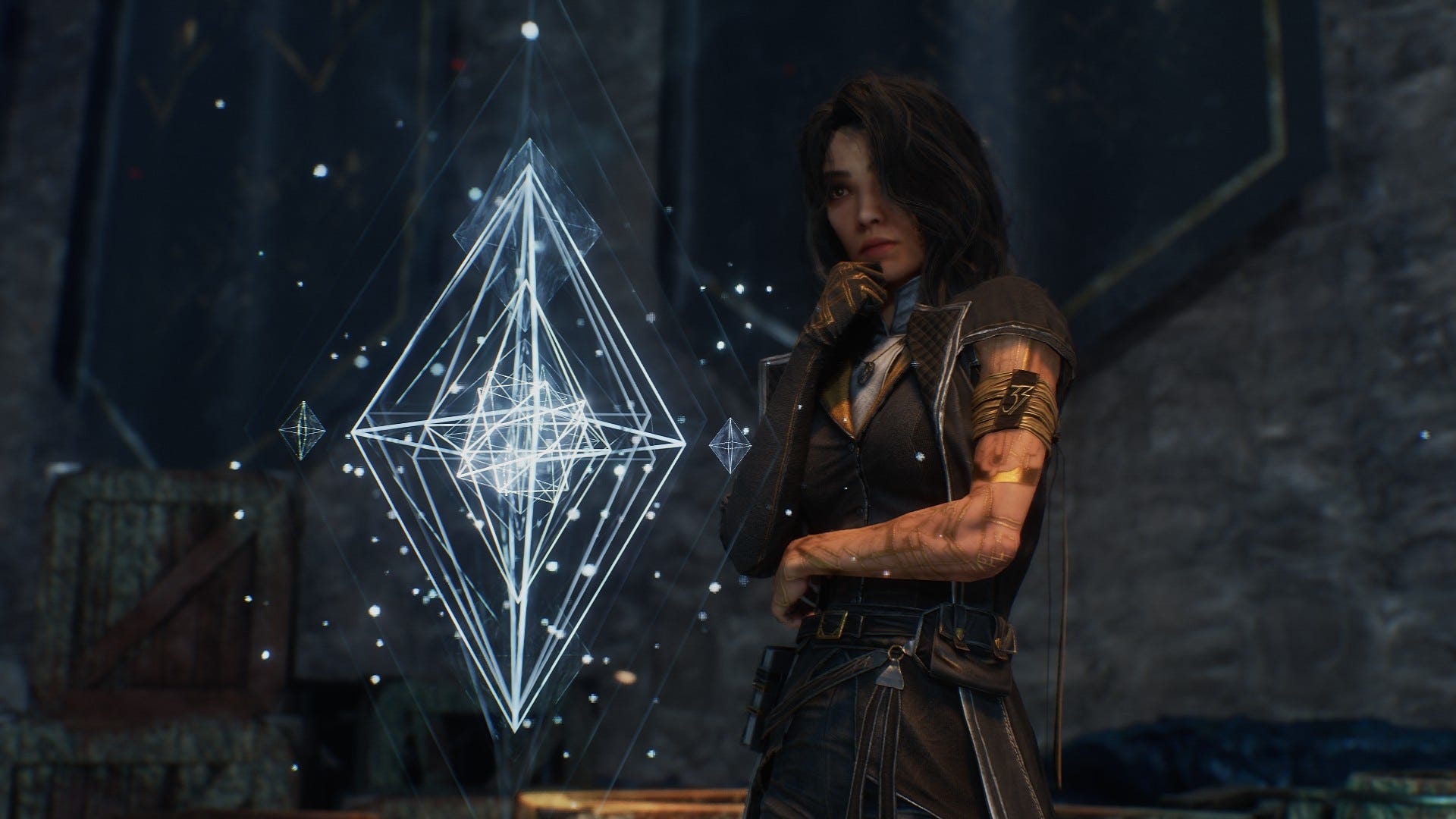
Recent developments have shown that Larian Studios, celebrated for Baldur’s Gate 3, and Sandfall Interactive, with Expedition 33, have both been found to incorporate generative AI tools. These discoveries came after the games had already been embraced by audiences and critics alike. The slap here is the sudden realization that AI is not a distant experiment but already embedded in the cultural products people consume.
“You’ll Take It”: GOTY Recognition
Spade’s assertion that Cairo will “take it” mirrors the public’s limited ability to resist AI’s integration. Both Baldur’s Gate 3 and Expedition 33 won Game of the Year awards, signaling that despite concerns about AI, the public and industry alike are rewarding these titles. The awards function as a collective acceptance: players may debate the ethics of AI in creative work, but they continue to celebrate and consume the products. The inevitability of AI adoption is underscored by the fact that resistance does not prevent success, it merely acknowledges it.
“And Like It”: Normalization Through Success
Spade’s command that Cairo will “like it” resonates in the way AI use is normalized through celebrated success. Once a game wins Game of the Year, its methods (whether traditional or AI-assisted) gain legitimacy. The public begins to “like it” not because they consciously approve of AI, but because the end product delivers enjoyment. Over time, the association of AI with award-winning titles reframes the technology as not only acceptable but desirable, embedding it deeper into the creative industries.
The Illusion of Control
Game developers often emphasize player agency, marketing their titles as experiences where gamers shape the narrative, the world, and even the industry itself. This rhetoric extends beyond gameplay into the broader ecosystem: players are told that the market is free, that consumer choice dictates success, and that creativity flourishes independently. Yet this freedom is largely illusory.
In The Maltese Falcon, Cairo believes he can negotiate with Spade, just as players believe they are in control of the market. In reality the terms have already been set by those with power. And just as Cairo is manipulative, duplicitous, and constantly maneuvering for advantage; in the eyes of many game developers, consumers occupy a similar position.
Players demand more content, criticize relentlessly online, and push for impossible standards of creativity and pricing. Developers, weary of this constant pressure, begin to see their audience as adversaries. The slap, then, is not only about dominance but about punishment: reminding consumers that they are not in charge, no matter how loudly they protest.
Ironically, the developers themselves are often painted as villains; accused of exploiting labor, cutting corners, or manipulating markets. Yet in this noir-like framing, they embrace that role. Just as Spade is no saint but still commands authority, developers must accept being seen as ruthless operators. They slap back at consumers by curating markets, imposing labels like “indie” on titles such as Expedition 33, and embedding AI into games without transparency. The message is clear: The corporations hold the power to decide how this story unfolds, not the consumer.
Curated Markets and the China Comparison
The case of Expedition 33 illustrates this manipulation. Despite being backed by significant resources, the game was branded with the “Indie” title, a label that carries cultural cachet and appeals to players who value authenticity and grassroots creativity. This forced designation reveals the curated nature of the market. Rather than a free marketplace where titles rise organically, corporations engineer categories and narratives to maximize appeal. In other words, “indie” is not always independent, but a marketing construct designed to shape perception.
This marketing is based less on free market capitalism than a curated marketplace, resembling the controlled ecosystems seen in places like China, where all content is tightly managed and filtered. In the West, the curation is subtler, hidden behind the language of choice and freedom. Players are told they are consuming what they want, but in reality, they are consuming what corporations have decided they should want.
The slap is disguised as empowerment, but the outcome is the same: submission to a system of control.
Perhaps most striking is the public’s response. Just as Cairo ultimately accepts Spade’s dominance, many players are embracing curated markets as if they were organic. They celebrate titles like Expedition 33 and Baldur’s Gate 3, both of which have also incorporated generative AI, rewarding them with Game of the Year accolades. The normalization of AI and curated labels demonstrates how quickly resistance gives way to acceptance. Players are not only taking the slap, they are “liking it,” consuming the narrative of freedom while participating in a system of control.
Conclusion
The metaphor of the slap in The Maltese Falcon illuminates the uneasy relationship between developers and consumers in the age of AI. Both sides are cast as bad guys, locked in a cycle of manipulation and submission. Developers slap, consumers take it, and together they perpetuate a curated market disguised as freedom. In this story, the public is not the innocent victim but Cairo—scheming, complicit, and ultimately powerless. And, unfortunately, like Cairo, history has only shown that they will continually take the slap, and they will like it.
 | A guest post by
|
I am not anti-AI; I like that this tool can make work easier and break down certain barriers in communication. It is also ironic that artists who advocate so much for the democratisation of things despise democracy when it comes to creating or drawing. Obviously, this is because it is not art that is the issue, but their money. In Hollywood, there are people who could easily be replaced by AI because they have basically stopped writing anything other than rubbish or a mechanical checklist of studio rules, and AI can do that faster and better. Furthermore, it is well known that many writers really want to use AI, but without losing their jobs. That is where, for me, the problem lies: in these matters, they claim to be anti-AI and defenders of artists, but when it comes down to it, they are using it. The lie and the hypocrisy are the offence. However, outside of the above margin, what is dangerous about AI is not using it, but idolising it, pretending that it is greater and more useful than it really is. That aspect is dangerous and goes beyond the Luddite preaching, which is what makes the most noise.
I think “curated” is 20’s version of the top corporate buzzword that “robust” used to occupy a decade or so ago. Nice usage.