


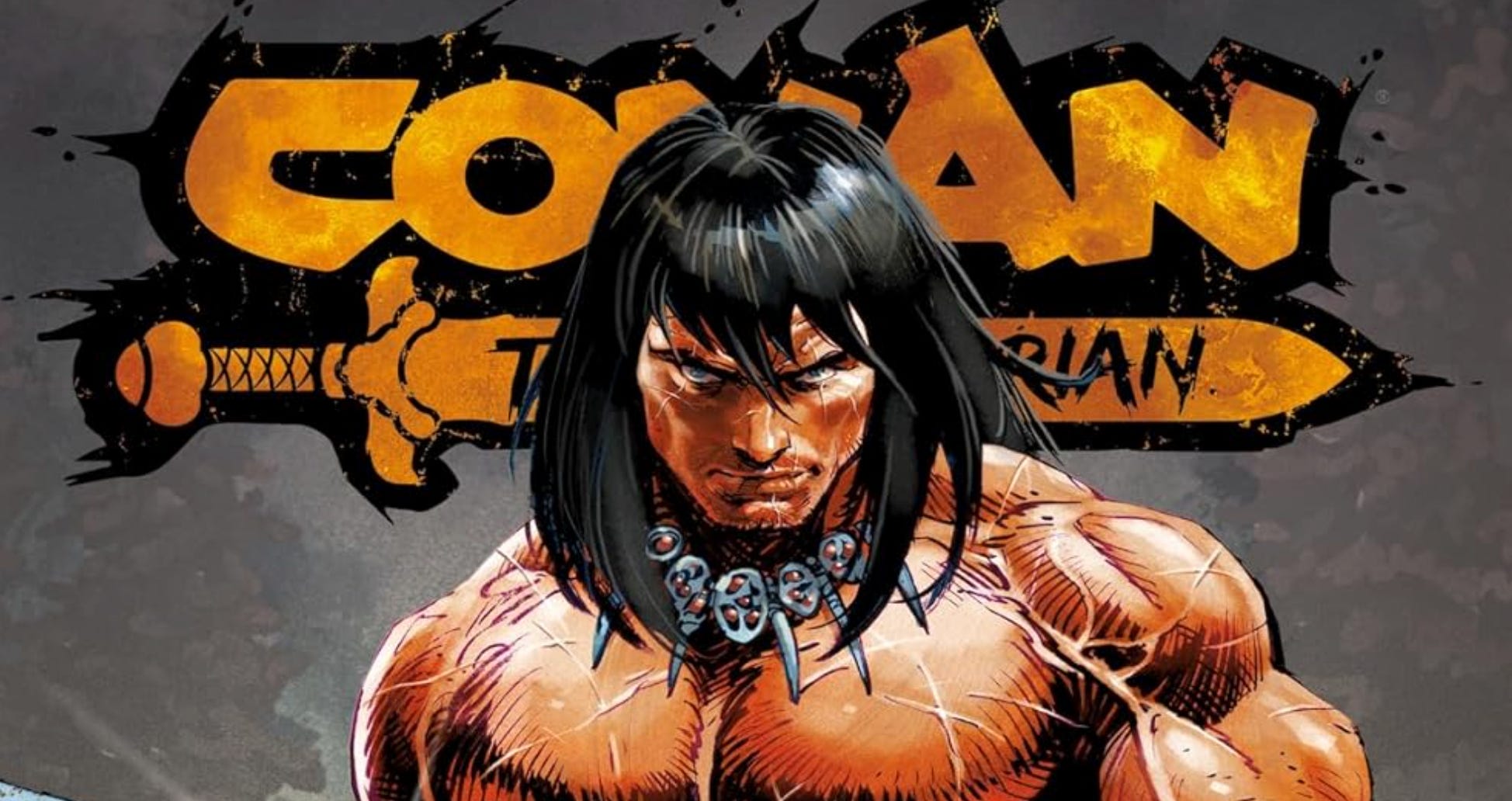
Jim Zub and Titan Comics continue their impressive run with Conan the Barbarian: A Nest of Serpents, collecting issues 21-24 in a trade paperback that maintains the quality established across six volumes. This is the kind of consistent, professional Conan storytelling that respects Robert E. Howard’s source material while pushing the character forward in new directions.
The book proves that Zub understands what makes Conan work—brutal action, atmospheric worldbuilding, and a protagonist who solves problems through violence and cunning rather than speeches about friendship. Six volumes in, the creative team is still delivering quality sword-and-sorcery that feels like classic pulp fiction rather than modern comics trying to deconstruct the genre.
The Story: Serpent Cults and Cosmic Horror
A Nest of Serpents ties into Titan’s year-long Serpent Ring saga, a crossover event connecting the Conan and Solomon Kane series through a cursed artifact from the snake god Set. Conan finds himself entangled with Set’s cult, facing both human enemies and supernatural threats as the ring’s influence spreads across the Hyborian Age.
The story follows Conan through multiple encounters: a rescue of a fair maiden who falls for him, arrival in a town with dark secrets, capture and enslavement, gladiatorial combat in an arena, and eventually a confrontation with a sorcerer serving Set. It’s classic pulp structure: Conan gets into trouble, fights his way through it, and moves on. The pacing is relentless, the action is brutal, and the atmosphere drips with the kind of weird horror that made Howard’s original stories compelling.
Zub doesn’t reinvent Conan, but he delivers exactly what fans want. The barbarian is tough, pragmatic, and unstoppable. He doesn’t angst about his choices or form found families. He survives, he fights, and he wins. That’s Conan.
The Art: Solid But Not Spectacular
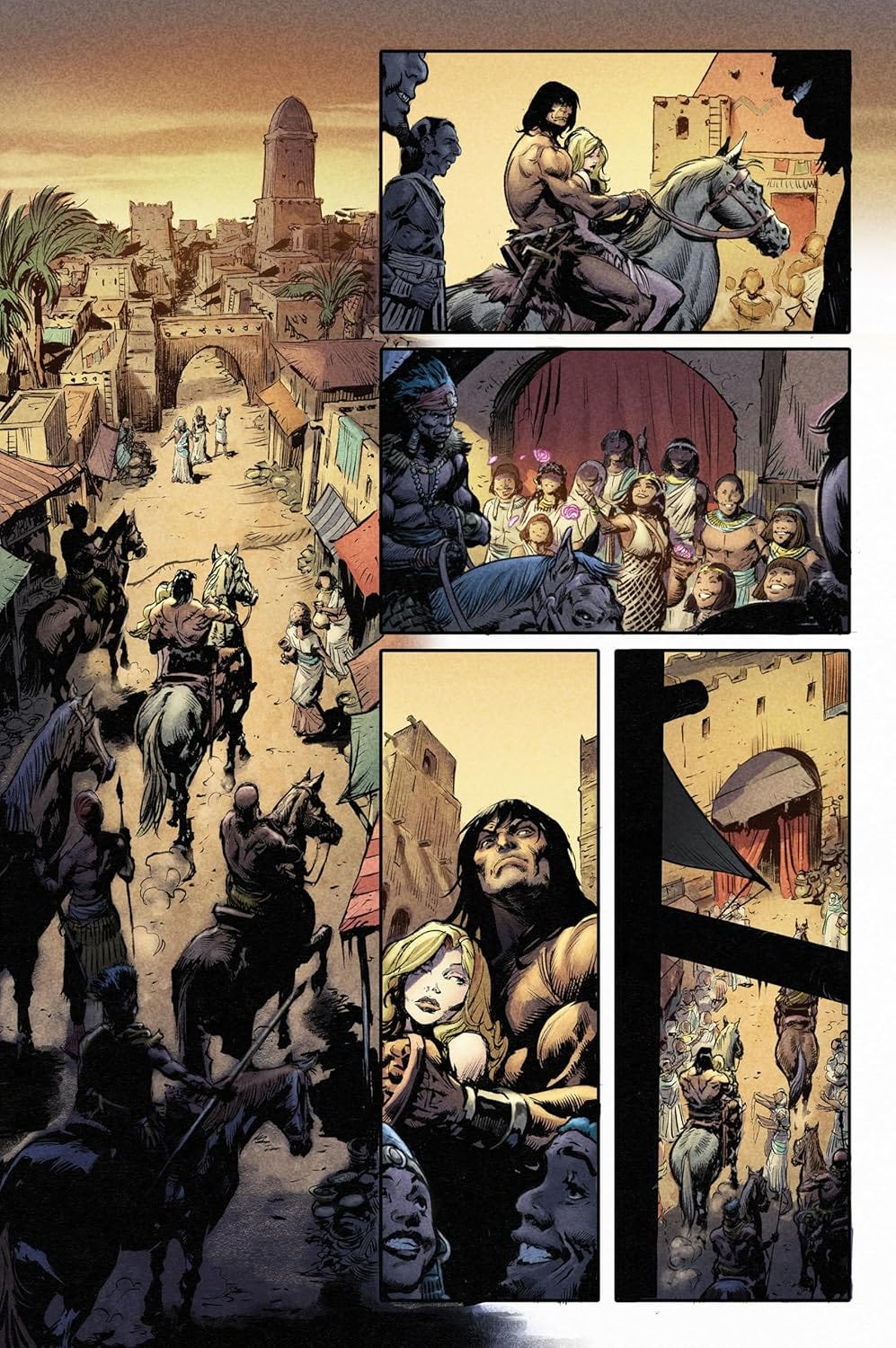
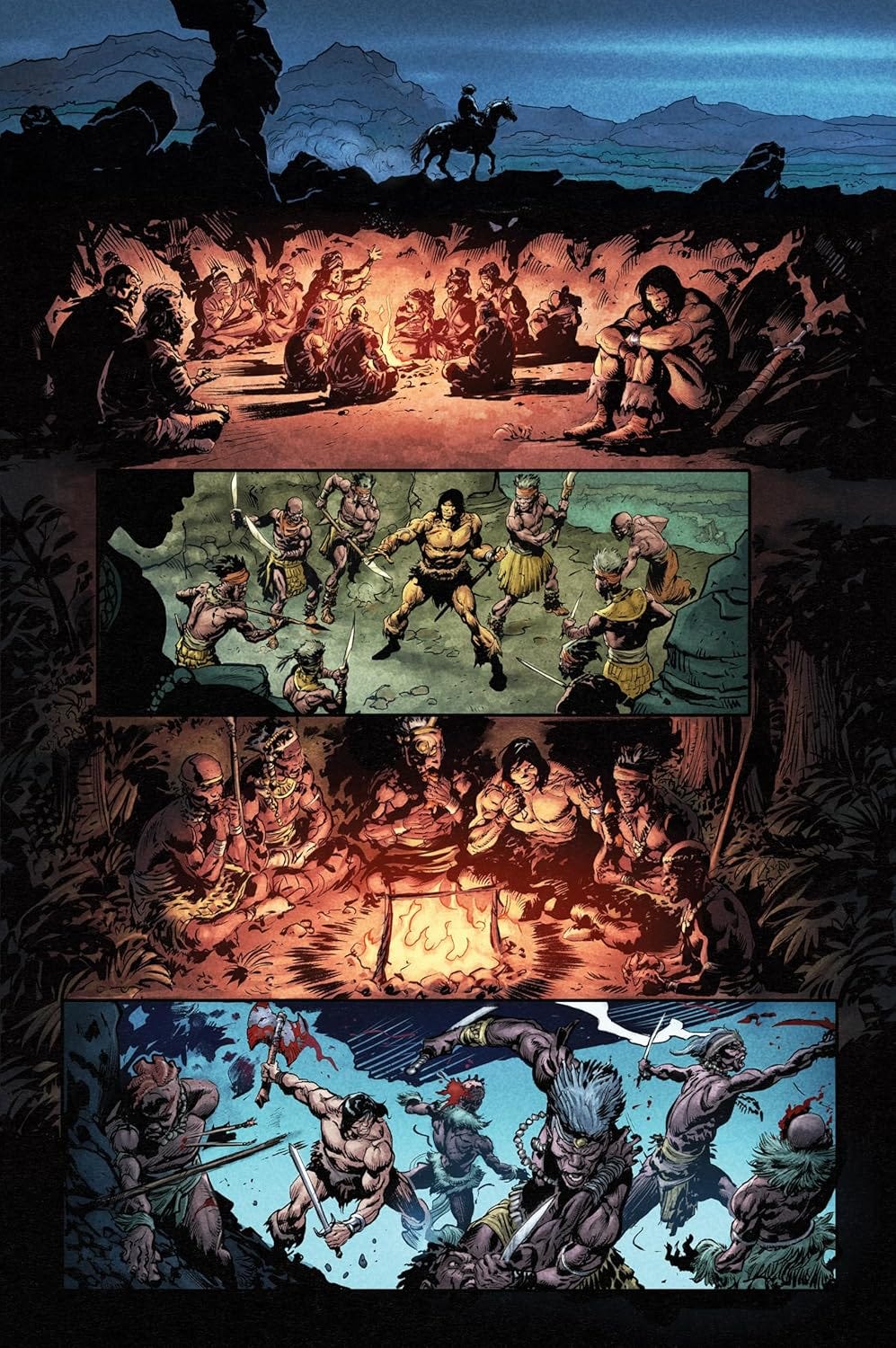
Fernando Dagnino handles pencils and inks for this arc, stepping in for Doug Braithwaite, who illustrated previous volumes. Dagnino’s work is solid—detailed backgrounds, clear action sequences, expressive characters. The art serves the story effectively without calling attention to itself.
But it’s not Braithwaite. Doug Braithwaite’s work on earlier Conan volumes was exceptional. His linework had a classical quality, his compositions were dynamic, and his rendering gave weight to every figure. Braithwaite’s art had that extra panache, that visual flair that elevated the material. Dagnino’s style is competent but lacks that polish. The coloring also feels different, less atmospheric, more straightforward. It’s still good work, but it doesn’t have the same visual impact as previous volumes.
This isn’t a criticism of Dagnino or the colorist, they’re professional artists delivering quality pages. It’s just that Braithwaite set a high bar, and the shift is noticeable. The art is an 8 out of 10 where Braithwaite’s was a 10.
Pulp Action Done Right
Zub nails the pulp formula. The story moves quickly, the stakes escalate naturally, and Conan remains the focus throughout. There’s no padding, no unnecessary subplots, no modern sensibilities shoehorned in. This is sword-and-sorcery the way it’s supposed to be with violent, atmospheric, and unapologetically masculine.
The gladiatorial arena sequence is a highlight. Conan is captured, thrown into combat, and dominates through sheer ferocity. Zub doesn’t waste time on training montages or internal monologues about the morality of killing for entertainment. Conan fights because that’s what he does, and he’s better at it than anyone else. The sequence is brutal, efficient, and satisfying.
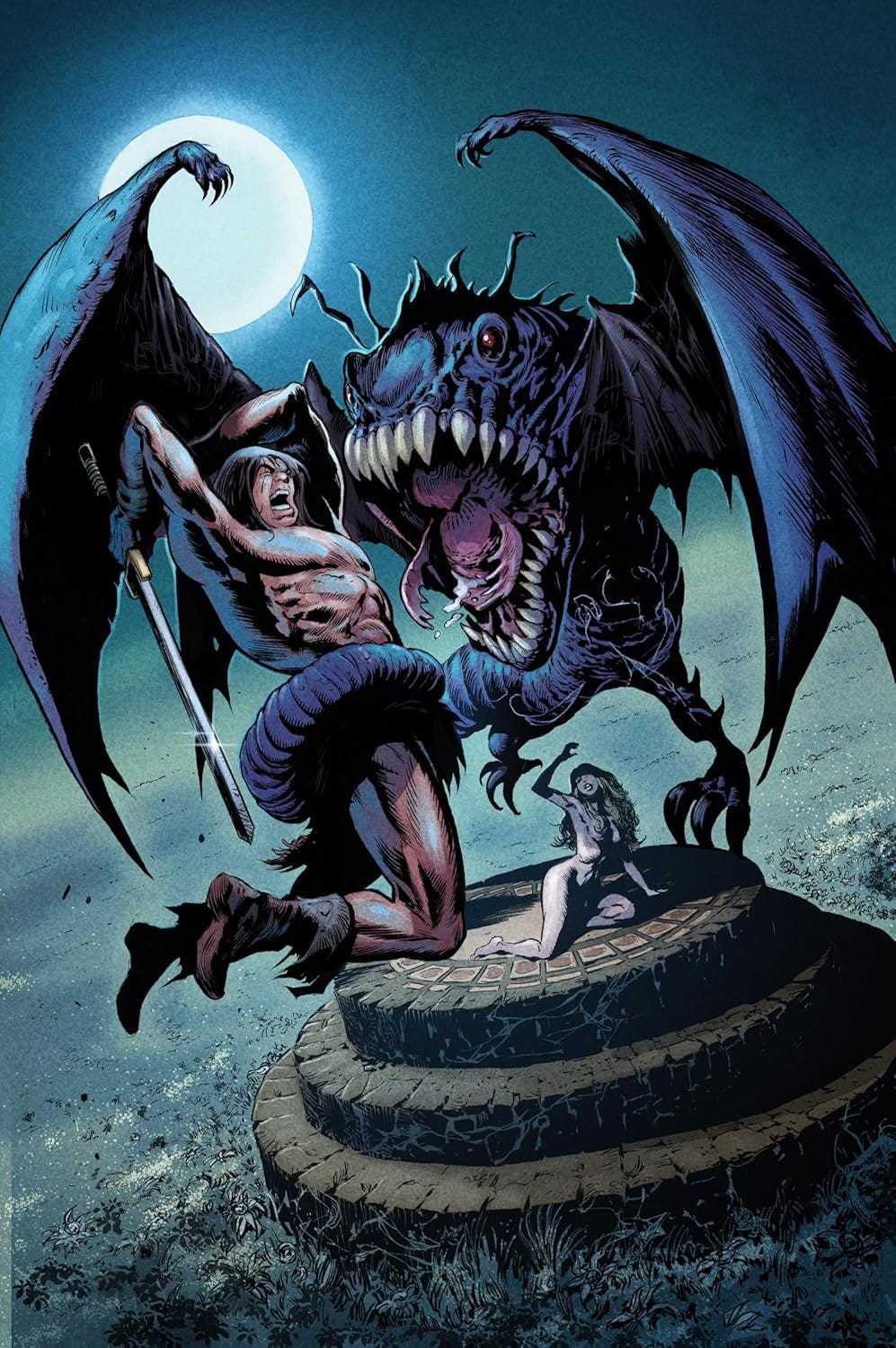
The supernatural elements are handled well. The sorcerer serving Set is genuinely creepy, the cultists are fanatical and dangerous, and the cosmic horror undertones give the story weight beyond simple action. Zub understands that Conan stories work best when they blend sword-fighting with weird horror—Howard’s original tales were as much horror as adventure, and Zub captures that balance.
The female characters are classic pulp—beautiful, dangerous, and often doomed. The maiden Conan rescues falls for him, which is standard Conan fare. She’s not a modern “strong female character” who lectures Conan about toxic masculinity—she’s a woman in a dangerous world who recognizes strength when she sees it. The story ends with her jumping to her doom rather than being captured, a tragic conclusion that reinforces the harsh reality of the Hyborian Age. Conan doesn’t save everyone. Sometimes people die, and he moves on.
The Serpent Ring crossover adds depth without overwhelming the story. Readers don’t need to follow the entire event to understand what’s happening. The book works as a standalone Conan adventure that happens to connect to a larger narrative. That’s good crossover design.
The Bigger Picture: Six Volumes and Still Strong
The most impressive thing about A Nest of Serpents is that it’s the sixth volume in Zub’s run and the quality hasn’t dropped. Most comic runs decline after a few arcs as creators run out of ideas or lose interest. Zub is still delivering solid Conan stories that respect the source material and understand what makes the character work.
Titan’s Conan line has been one of the bright spots in modern comics. They’re treating Robert E. Howard’s properties seriously, hiring talented creators, and producing quality books. The illustrated editions are well-made, the stories are faithful to Howard’s vision, and the production values are high. This is how you handle classic pulp properties with respect and craftsmanship.
Zub has expressed interest in continuing with Conan, and based on this volume, he should. He understands the character, he writes tight action, and he doesn’t try to modernize or deconstruct what makes Conan compelling. That’s increasingly rare in modern comics, where creators often feel compelled to “fix” classic characters by making them more progressive or self-aware.
Conan doesn’t need fixing. He needs writers who understand that he’s a barbarian who solves problems with violence, lives by his own code, and doesn’t apologize for being what he is. Zub gets that, and it shows in every page.
Final Verdict
Conan the Barbarian: A Nest of Serpents is another solid entry in Jim Zub’s run. The story is tight, the action is brutal, and the pulp sensibility is intact. The art is good but not exceptional, and the crossover elements occasionally intrude, but these are minor complaints. This is quality sword-and-sorcery that delivers exactly what Conan fans want.
If you’ve been following Zub’s run, this is a must-buy. If you’re new to the series, you can start here without too much confusion, though reading earlier volumes will give you better context for the Serpent Ring storyline. If you’re a Robert E. Howard fan looking for comics that respect the source material, Titan’s Conan line is the best option available.
Six volumes in and still crushing. That’s the headline, and it’s accurate. Zub and Titan are doing right by Conan, and fans should support that.
You can get A Nest of Serpents here.
Rating: 8/10
Solid storytelling, brutal action, and respect for Robert E. Howard’s vision make A Nest of Serpents a worthy addition to the Conan canon. The art is good but not exceptional, and the crossover elements occasionally feel obligatory, but these are minor issues. Highly recommended for Conan fans.
What do you think? Are you following Jim Zub’s Conan run, or is this your entry point?
NEXT Major Comic Publisher Throws In The Towel And Turns To Licensing