


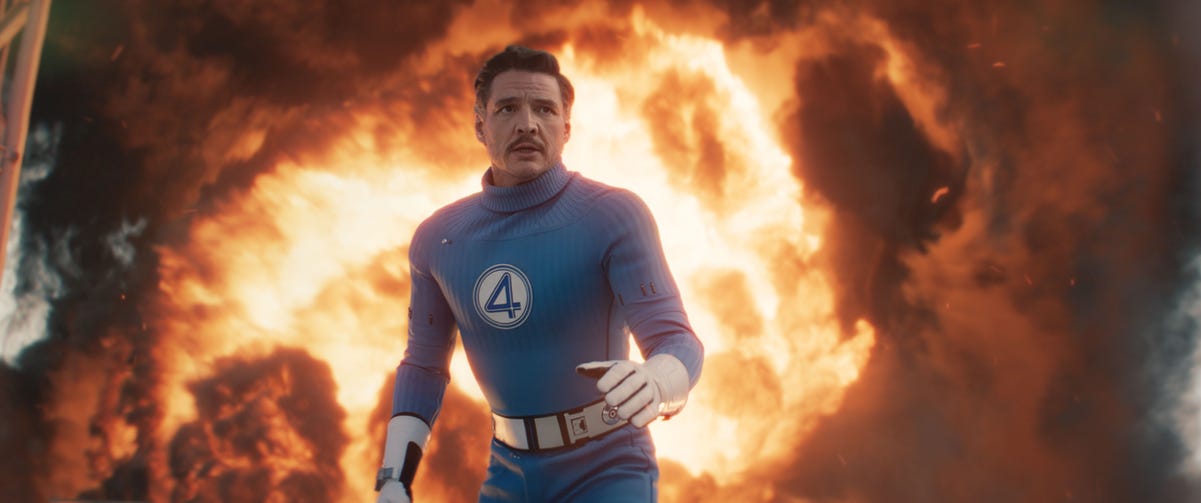
It seems like every few months, someone posts another side-by-side comparison of a classic film shot and its Current Year equivalent. And every time, the pattern repeats: The older frame looks tactile, lived-in, almost shockingly vivid. The post-Cultural Ground Zero frame looks like a digital screensaver created by a nervous intern who’s afraid to commit to a decision.
The YouTube channel Like Stories of Old recently explained this phenomenon with unusual clarity. His thesis: The crisis has nothing to do with CGI, color grading, or cameras. The real problem is that filmmakers stopped grounding images in the perceptual mechanisms people actually use to understand the world.
In other words, movies stopped respecting the way we apprehend reality.
Take the comparison he opens with. A simple shot from Jurassic World :Rebirth versus a simple shot from The Lost World. No dinosaurs. No effects. Just landscapes and people.
One feels like you could step into it.
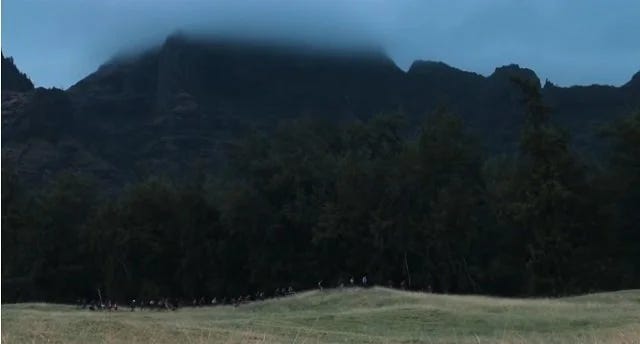
The other feels like a theme park poster.

The difference isn’t nostalgia. The classics used deep focus, sharp backgrounds, and spatial clarity. They let the viewer scan the frame the way the human eye scans an actual environment. The result is you’re not just shown a place; you’re placed inside it.
New Hollywood doesn’t use these well-known techniques; not because they can’t.
Because they won’t.
Contemporary cinematography defaults to shallow focus, soap opera-style framing that isolates the actors, and endless post-processing that strips every image of physical presence. And directors light scenes not to make them look real, but to make them easy to manipulate later. Then editors grade it all in ways that are anathema to nature.
The video spends significant time on the idea of perceptual realism: i.e., that a film feels real when it triggers the same cognitive habits we use to evaluate our real-world surroundings.
For decades, filmmakers understood that principle. They built frames around our senses. Today, Hollywood builds frames around software.
Contrast Avatar: The Way of Water with Quantumania.


Both are artificial worlds. Yet Cameron’s digital ocean feels more authentic than Marvel’s green-screen sludge. Why?
Because, credit where it’s due: Cameron respects perceptual realism. He loads every shot with spatial information, environmental detail, and consistent texture. When you watch his movies, your eyes operate as they do in life.
Marvel, by contrast, locks the viewer inside a blur. The frame contains no depth, no weight, and no sensory cues; just a handful of actors floating in pastel fog. The eye has nowhere to go because nothing in the image was built for it.
The second half of the video digs deeper, introducing the idea of haptic visuality: images that don’t just look, but feel, real. The best transcend depicting space to depict texture. They let your eyes touch the world.
These aren’t just cinematic tricks. They forge contact points between the viewer and the film’s material presence. The result is a powerful reminder that cinema is a physical art, not a PowerPoint enhanced by VFX plugins.
This explains why modern blockbusters often feel weightless. Their surfaces cannot be touched. Their actors are too clean. Their lighting sterilizes instead of revealing. The sets contain no grit. Everything looks like a toy encased in lucite on a collector’s shelf.
The inescapable conclusion is that Hollywood has become terrified of matter itself.
Why would studios choose unreality when audiences demonstrably crave the opposite?
Because realism—in the perceptual, sensory, and ontological sense—requires commitment.
To a location
To lighting that might not flatter the stars
To sweat, mud, bad weather, and the unpredictable
To images that cannot be fixed in post.
But commitment implies risk. And risk implies authority. Which terrifies Late Moderns more than anything. Modern Hollywood can only imitate the surface glamor of past craftsmanship. It cannot recreate the substance.
The result? Films that are so frightened of the real world that they retreat into beige fog and depth-of-field blur like a frightened mole retreating into its hole.

The collapse of cinematic realism mirrors the decline of realism in our culture. A society that rejects nature cannot depict it. A people that deny the physical implications of their choices cannot create images of consequence.
The newer films feel fake because they’re products of digital thinking: endless revision, infinite plasticity, refusal to accept the natural limits imposed by the world.
Reclaiming realism means reclaiming contact with the created order. When filmmakers reconnect with creation, whether in a Peruvian jungle or a digital alien ocean, the picture still comes alive.
And pictures died because they detached from it.
Brian Niemeier is a best-selling novelist, editor, and Dragon Award winner with over a decade in newpub. For direct, in-person writing and editing insights, join his Patreon.
NEXT: Marvel TV Boss Describes Daredevil As A "Revolutionary" For 'Daredevil: Born Again' Season 2
 | A guest post by
|
Remove women from leadership positions in Men’s properties and you’ll immediately solve the problem.
Suspension of disbelief has been so disregarded I wonder if these filmmakers are doing it on purpose to be "stylistic", or if they generally have no concept of it in the first place.
All of the following need to stop:
*Wire-fu
*Everyone kung-fu fighting
*Unstoppable, super-skilled bad-asses
*Excessive, cartoon violence that characters shrug off
*Physics defying running, jumping, falling
*Spin-ny shit (no scope 360!)
*Rapid fire cuts
*Empty, sterile backgrounds
*Overblown, super majestic, trying too hard to impress backgrounds
*Frenetic, everything is happening everywhere all at once backgrounds
*Everyone is super smart or super dumb, sometimes at the same time, because XYZ needs to happen and happen NOW
*Dialogue that no human would ever say, not in a million years
*Anachronistic dialogue
*Anachronistic tech
*Super tech that might as well be magic
*Bullshit tech that makes no sense, defies physics, or breaks in-universe rules
There's dozens of other examples. Point being: STOP doing fake-looking, fake-sounding, fake-feeling shit.
For us to truly enjoy your entertainment product, we have to at least believe a tiny piece of it is plausible.
If the world we live in is 100%, you can maybe push 125% before people just stop believing what you're suggesting in your film. Problem is, these wankers start at something like 200% and don't understand that they lost us immediately, let alone when they crank the dial to 300.